

After the Fire: How Heathland Recovers and Why It Sometimes Needs a Spark
Conservation | September 22, 2026
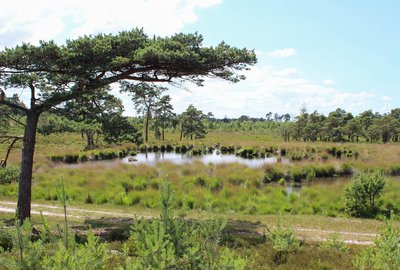
There is nothing that frightens people quite like the word 'fire' on a heath. And rightly so: uncontrolled wildfires can destroy decades of delicate growth, kill slow-moving reptiles, and leave behind a blackened, eroding landscape. But fire is also one of the oldest management tools in the heathland story, and understanding its role—both destructive and creative—is essential to understanding these habitats at all.
Heathland is, in ecological terms, a fire-adapted community. Its dominant plants—heathers, gorse, bracken—have evolved alongside occasional burning, whether from lightning strikes or from human management. Heather in particular responds to fire in a remarkable way. Burn it, and it does not necessarily die. Instead, it resprouts from buds at the base of the plant, sending up fresh green shoots from what looks like nothing but ash.
The Traditional Use of Fire
On many heaths, particularly in upland Britain, controlled burning—often called 'swaling' or 'muirburn'—has been practised for centuries. The purpose was practical: to remove old, woody heather and encourage fresh growth that sheep and red grouse could feed on. The result, ecologically, was a mosaic of different-aged stands of heather, which in turn supported a wider range of plants and animals than a uniform age structure would.
That mosaic is the key. Young heather provides food and cover for insects and young birds. Older, taller heather provides nesting and roosting cover for species like the merlin and the nightjar. A heath that is all one age—whether all young or all old—supports less life than one with a mix. Carefully managed burning, alongside grazing and cutting, is one way to create that mix.
But the word 'carefully' is doing a lot of work. Controlled burns are carried out in specific conditions: when the ground is damp, when wind is light and steady, when the vegetation is dry enough to burn but the peat beneath is wet enough not to catch. They are timed to avoid nesting birds and reptiles. They are done in small patches, not vast swathes. And they are planned and supervised by people who know the site intimately.
When Fire Goes Wrong
Uncontrolled wildfire is a different matter entirely. A summer blaze on dry heath can spread with terrifying speed, especially where there is a build-up of dead vegetation or where the peat itself is dry. Peat fires can smoulder underground for days, killing roots and seed banks and leaving a scar that takes decades to heal. Reptiles—adders, lizards, slow-worms—are especially vulnerable, unable to move fast enough to escape. Invertebrates, eggs, and nestlings are simply lost.
Climate change is making this worse. Drier springs and hotter summers mean more days when the heath is a tinderbox. That is why fire prevention matters so much: no disposable barbecues, no discarded cigarettes, no campfires. And it is why conservation teams now often prefer cutting or grazing to burning on sensitive sites, reserving fire for places where it is genuinely the right tool.
After a fire, the heath does recover—if the soil is intact. Within a year, green shoots appear. Within five, the heather is knee-high again. But recovery is not the same as restoration, and the best approach is always to prevent the fires we can and manage the ones we choose. Fire on the heath is neither good nor bad in itself. It is a force, and like any force, its value depends entirely on who is holding the match—and how well they understand the ground beneath their feet.


-
Walking the Heath in Winter: What to Look For When the Purple Is Gone
Sep 22, 2026Outdoor Exploration

-

-

Heathland Herald

Peering beneath the purple blooms reveals a bustling underground ecosystem that sustains the entire heathland.